Welcome to Scott Country International, the UK's leading specialist in night vision and thermal imaging.

We explain key specifications such as thermal sensor resolution, NETD (thermal sensitivity) and detection, recognition and identification range, as well as real-world factors like weather conditions, terrain, image quality and UK thermal imaging legality, helping you make an informed decision when selecting a thermal imager for woodland or open-ground use.
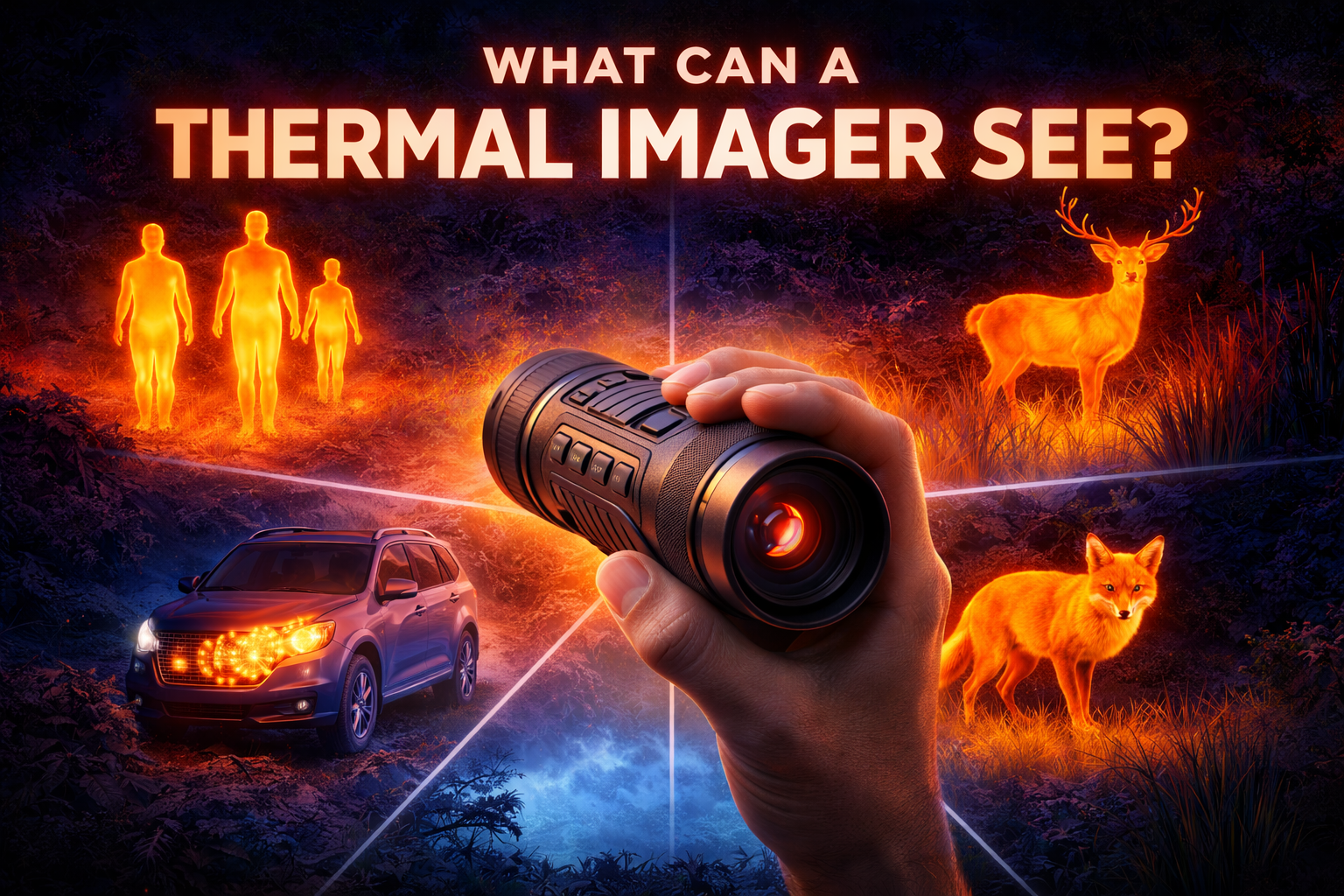
A thermal imager such as the Hikmicro Habrok 4K, detects heat signatures rather than visible light, allowing it to see people, animals and vehicles in complete darkness, daylight or challenging conditions such as smoke and light fog. Any object that emits heat, including mammals, birds, engines and recently used machinery will stand out clearly against cooler surroundings when viewed through a thermal camera. This makes thermal imaging particularly effective for wildlife observation, pest control and security applications.
However, thermal imaging prioritises temperature contrast over fine visual detail. While a thermal imager can easily detect the presence and movement of a target, it does not show facial features, clothing colours or written detail in the way a conventional camera or night vision device does. Instead, objects appear as contrasting shapes based on heat output, with warmer areas displayed more brightly depending on the selected colour palette. Understanding this difference between heat detection and image detail is key to setting realistic expectations of thermal imaging performance.
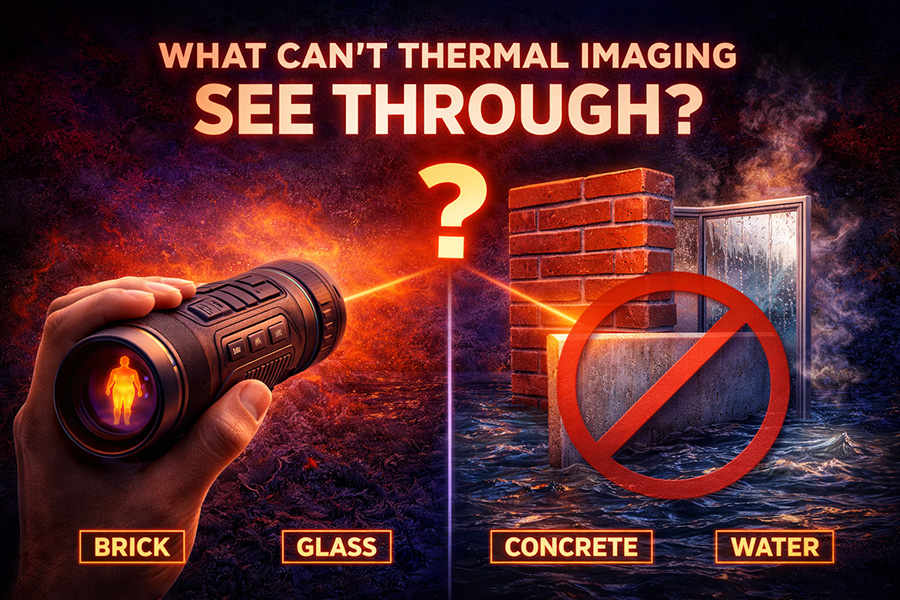
Despite common misconceptions, thermal imaging cannot see through solid objects. A thermal camera detects surface heat, not what lies behind materials, meaning it cannot see through walls, buildings, trees, glass or water. Instead, it displays the temperature of the outer surface of an object, which can sometimes lead to misunderstandings about thermal imaging capabilities.
Glass is a particularly important limitation, as it reflects infrared radiation rather than transmitting it, so thermal imagers cannot see through windows at all. Dense vegetation, heavy rain and deep water will also block or significantly reduce thermal detection, although light foliage may allow partial heat signatures to be seen if there is sufficient temperature contrast. Understanding these limitations helps users avoid unrealistic expectations and use thermal imaging technology more effectively in real-world conditions.
The main difference between thermal imaging and night vision lies in how each technology creates an image. A thermal imager detects heat (infrared radiation) emitted by objects, allowing it to locate people, animals and vehicles in complete darkness with no ambient light. In contrast, night vision devices amplify available light such as moonlight or starlight to produce a visible image, meaning they rely on some level of illumination to function effectively.
Each technology has its strengths. Thermal imaging excels at detection, quickly highlighting warm targets through darkness, light vegetation and camouflage, making it ideal for scanning large areas and spotting movement. Night vision provides greater visual detail, allowing users to identify shapes, terrain and objects more clearly once a target has been found. For this reason, many users combine thermal imaging for detection with night vision for identification, choosing the technology, or combination that best suits their application.
Sensor resolution in thermal imaging refers to the number of pixels in the thermal sensor, commonly expressed as 256×192, 384×288 or 640×512. Higher thermal sensor resolution means more pixels are used to build the image, resulting in greater image detail, smoother edges and improved target recognition at longer distances. In simple terms, the higher the resolution, the clearer and more informative the thermal image will be.
A higher-resolution thermal imager does not necessarily increase detection range, but it significantly improves recognition and identification capability, especially when using digital zoom. Lower-resolution thermal cameras are often well suited to short-range or woodland use, where wider fields of view are beneficial, while higher-resolution sensors excel in open ground where identifying targets at distance is more important. Understanding thermal sensor resolution helps users balance performance, application and budget when choosing the right thermal imaging device.
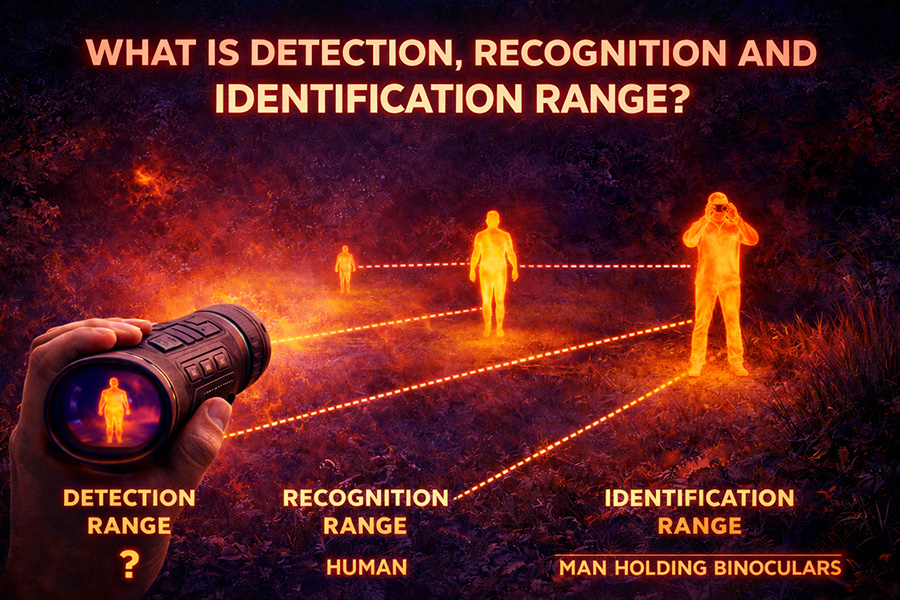
Detection, recognition and identification range are standard performance terms used in thermal imaging to describe how well a thermal imager can observe a target at distance, but they are often misunderstood.
Detection range refers to the maximum distance at which a thermal camera can detect the presence of a heat source, such as a person or animal, without any detail. Recognition range is the distance at which the user can determine what type of target it is, for example distinguishing between a human and an animal. Identification range is the shortest of the three and describes the distance at which a specific target can be positively identified. For example a thermal imager such as the NocPix Lumi P13 has a detection range of up to 670m, where as its larger sibling the Lumi H35R has a detection range of up to 1800m, with the lens size and thermal sensor being the main contributing differences.
Manufacturers often quote maximum detection ranges, as these numbers are the largest and most eye-catching, but real-world performance depends on factors such as sensor resolution, lens focal length, NETD, weather conditions and terrain. In practical use, recognition and identification distances are far more relevant than raw detection range, particularly for hunting, wildlife observation and pest control. Understanding these differences helps users set realistic expectations and choose a thermal imager that matches their typical viewing distances and application.
Weather conditions have a significant impact on thermal imaging performance, as thermal imagers rely on temperature differences between a target and its surroundings. Cold, dry conditions typically provide the best results, creating strong thermal contrast that allows people, animals and vehicles to stand out clearly. Conversely, warm ambient temperatures can reduce contrast, making heat signatures appear less distinct especially when the environment and target are closer in temperature.
Rain, fog, high humidity and heavy mist can also affect how well a thermal camera performs by absorbing or scattering infrared radiation, which may reduce detection and image clarity at longer distances. While thermal imaging generally performs better than night vision in poor visibility, extreme weather will still limit range and detail. Understanding how weather and environmental conditions influence thermal imaging helps users interpret what they are seeing and set realistic expectations when using a thermal imager in the field.
The legality of thermal imaging depends on how and where a thermal imager is used, rather than the technology itself. In the UK, owning and using a thermal camera for activities such as wildlife observation, surveying or security is generally legal. However, the use of thermal imaging for hunting or pest control is subject to specific laws and regulations, particularly when thermal devices are mounted to firearms or used for taking certain species.
It is important to understand that legislation can vary based on application, species and equipment configuration, and rules may differ between England, Scotland, Wales and Northern Ireland. Users should always ensure they are acting within current UK law and follow relevant guidance from governing bodies. Because regulations can change, anyone using thermal imaging for shooting or professional purposes should seek up-to-date legal advice or consult official sources before use.
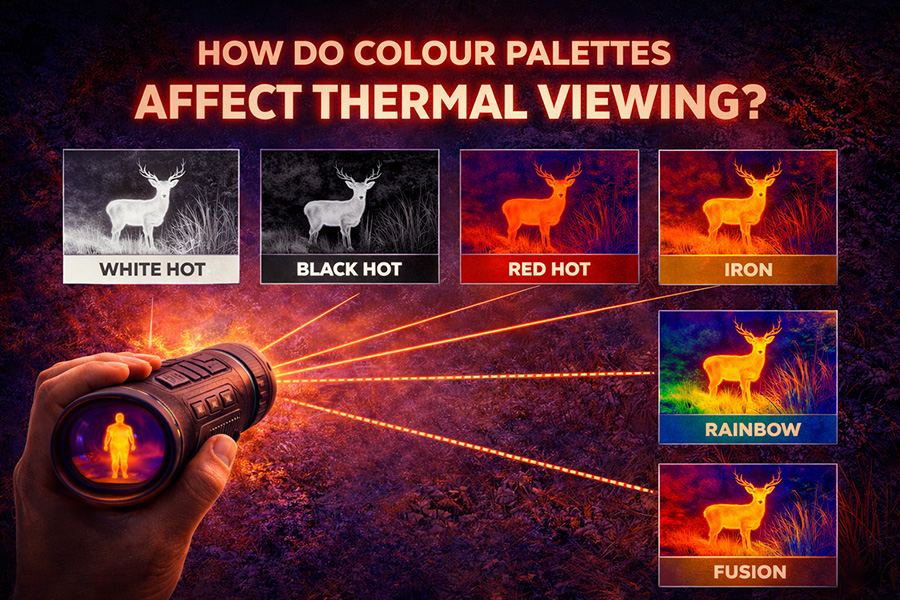
Colour palettes in thermal imaging determine how heat differences are displayed on a thermal imager, helping users interpret heat signatures more effectively. Common palettes such as White Hot and Black Hot display warmer objects as lighter or darker areas and are widely used because they provide natural contrast and clear target outlines. These modes are particularly effective for detection and general observation, as the human eye quickly recognises shape and movement in high-contrast images.
Multicolour palettes, including Red Hot, Iron, Rainbow or Fusion, assign different colours to varying temperature levels, which can help highlight subtle heat differences and improve target separation in certain conditions. However, while colour modes can make heat signatures stand out, they may also reduce perceived detail or cause visual clutter. Choosing the right thermal colour palette is largely a matter of preference and application, but understanding how palettes affect image clarity and target recognition allows users to get the most from their thermal imaging device.
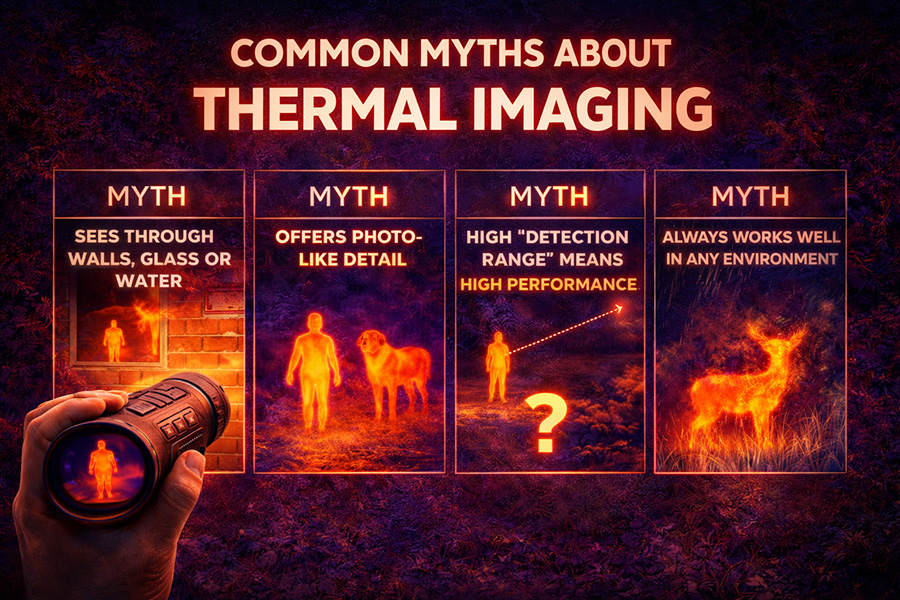
One of the most common myths about thermal imaging is that a thermal imager can see through walls, buildings or solid objects. In reality, thermal cameras only detect surface heat and cannot see through materials such as walls, glass or water. Another widespread misconception is that thermal imaging provides detailed, photographic images; instead, it displays heat signatures, meaning targets appear as contrasting shapes rather than fine visual detail.
It is also often assumed that a higher advertised detection range guarantees better performance in all situations. In practice, real-world effectiveness depends on factors such as sensor resolution, NETD, lens focal length, weather conditions and terrain. Finally, some users believe thermal imaging works equally well in all conditions, but environmental factors like high humidity, rain and warm ambient temperatures can significantly reduce thermal contrast. Understanding these myths helps users set realistic expectations and choose a thermal imager that genuinely suits their needs.

Scott Country International Limited is registered in England and Wales under company number: SC433828 Dumfries Enterprise Park, Tinwald Downs Road, Heathhall, Dumfries, DG1 3SJ.
Scott Country International Limited is authorised and regulated by the Financial Conduct Authority, under FCA number 721544. We act as a credit broker not a lender.
We work with a number of carefully selected credit providers who may be able to offer you finance for your purchase. (Written Quotation available upon request).
We will not receive any commission or fees from these arrangements. All finance is subject to status and income. Terms and conditions apply.
Applicants must be 18 years or over. We are only able to offer finance products from these providers.
As we are a credit broker and have a commercial relationship with the lender, the introduction we make is not impartial, but we will make introductions in line with your needs, subject to your circumstances.
Scott Country International Limited are registered with the Information Commissioners Office under registration number: ZA095834